This is default featured slide 1 title

Go to Blogger edit html and find these sentences.Now replace these sentences with your own descriptions.This theme is Bloggerized by Lasantha Bandara - Premiumbloggertemplates.com.

This is default featured slide 2 title

Go to Blogger edit html and find these sentences.Now replace these sentences with your own descriptions.This theme is Bloggerized by Lasantha Bandara - Premiumbloggertemplates.com.

This is default featured slide 3 title

Go to Blogger edit html and find these sentences.Now replace these sentences with your own descriptions.This theme is Bloggerized by Lasantha Bandara - Premiumbloggertemplates.com.

This is default featured slide 4 title

Go to Blogger edit html and find these sentences.Now replace these sentences with your own descriptions.This theme is Bloggerized by Lasantha Bandara - Premiumbloggertemplates.com.

This is default featured slide 5 title

Go to Blogger edit html and find these sentences.Now replace these sentences with your own descriptions.This theme is Bloggerized by Lasantha Bandara - Premiumbloggertemplates.com.

Showing posts with label International. Show all posts

Thursday, November 8, 2012

Fujitsu expects to double staff in 3 yearrs

Fujitsu Consulting expects to double its headcount to 6,000 people, hiring mostly from tier II and III towns, in the next two-three years to cash in on the talent pool in the country.
The company currently has about 3,000 people in India across four development centres in Noida, Pune, Hyderabad and Bangalore. Given the strong talent pool here, we are looking to double our headcount in two-three years time, especially at our Noida and Pune facility, Fujitsu Consulting India Vice President Sunil Bhave said.
The company is strengthening its presence as part of its plan to increase presence in key growth markets and expanding its IT services offerings to its global client base from India. Fujitsu Consulting offers IT and application management services as well as its own proprietary solutions. We are looking at primarily hiring from tier II and II towns.

We believe that maintaining a diversity mix would enable an overall development in the organisation and the country as a whole. Hence, we are planning to hire aggressively from cities and towns other than the metros, he said. Bhave added that the company has received tremendous response from campus placements and a significant number of the new hires would be freshers.
The company focuses on sectors like utilities and infrastructure, retail, manufacturing and consumer durables as well as some segments of oil and gas industry. Our size has helped us focus on clients and we have witnessed strong growth last year. This year, too, we are looking at atleast 10-20 per cent growth depending on how the client budgets turn out, Bhave said. He declined to comment on the company's revenues.

India UK to hold biannual talk on cyber security

International, Sakshi News, Sakshi Post,
In a bid to boost cooperation in the cyber security domain, India and the UK today decided to to conduct their Cyber Dialogue on a bi-annual basis to achieve objectives such as reducing the risk of threats from cyberspace to international security and tackle cyber crime.
This was announced after a comprehensive discussion between External Affairs Minister Salman Khurshid and his British counterpart William Hague on wide-ranging issues, including defence, counter-terrorism and cyber security.
A Joint Statement on Cooperation between India and the United Kingdom on Cyber Issues was also issued on the occasion. The statement noted that as part of the India-UK Strategic Dialogue, it was agreed that their Foreign Ministries would work together on areas of common interest in the cyber domain following which London Conference on Cyberspace in 2011 was organised by the UK. In October this year, the first structured dialogue between India and the UK on cooperation on cyber issues was held.

Both India and the United Kingdom share the core principles of liberty, transparency, freedom of expression and the rule of law which apply in cyberspace, the statement said. The objectives of the dialogue included enhancing international cooperation to reduce the risk of threats from cyberspace to international security and strengthening the bilateral cooperation to tackle cyber crime.
Further strengthening bilateral operational partnerships to identify and respond to threats from cyberspace and raise mutual resilience, collaborating on building skills and capacities to tackle threats from cyberspace and to use ICT for the objective of economic and social development are also part of the objectives, the statement said. It also include using existing cooperation between universities and business communities to develop synergy in research and development on cyber issues and creating a global multi-lateral, democratic and transport.

Exclusive: Two's company, three's crowd in US politics — TS Sudhir

 As the dust settles on the American Presidential election, the question that many in this country are asking is why should the choice be restricted to only two candidates.
Yes, on paper, some other candidates do manage to figure but in the high-voltage contest between the Democrats and the Republicans, they get reduced to being also-rans. 

In every election, the battle is for the undecided one-third of the electorate, given that both Democrats and Republicans have the following of one-third each of the American electorate.
But despite one in every three persons not really siding with either of the two parties, they are forced to fall in line simply because there is no other significant choice. Most voters do not want their vote to go waste so a third party candidate does not stand any chance.
One of the candidates who created a stir as a third party candidate was businessman Ross Perot in 1992. He won 18.9 per cent of the vote and that remains the best finish by a non-major party candidate in a Presidential election in the last 100 years.
However, four years later, Perot's Reform Party disappointed by finishing with just 8.4 per cent of the vote. The New York Times in a reference to the Obama vs Romney contest described the voters' dilemma as "like trying to decide between liver and brussels sprouts—a selection they would rather not have to make." There were other candidates this time round as well but in the end, they did not even stand up to be counted.
But the defeat of the conservative extreme right Republicans has already started the murmurs within the party. Herman Cain, a former Presidential candidate has called for a large fraction of Republican party leaders to leave the party and form a third, even more conservative party.
His argument interestingly is that "a third party is needed to save America".
The apprehension however is a clone of the Republicans would only help the Democrats consolidate its position in power for ever. After the Republicans' crushing defeat in 2008 at the hands of Barack Obama, the Tea Party emerged. While Cain's comments are unlikely to result in any kind of split in the Republicans, the party itself may metamorphose itself into an ultra-conservative form.
Both parties also have a vested interest in ensuring it is a straight fight between them and no third party comes to eat into their votes and create problems in a close contest. After all, they have not forgotten Florida in 2000 when Democrat Al Gore lost to George Bush by 537 votes. The loss was attributed partly to Green Party candidate Ralph Nader who took more than that number of votes from Gore in Florida.
From the perspective of a country like India, where multi-party system and coalitions have made the administrative process slow, the American system looks too organised. But perhaps Indian politics truly embodies the spirit of free economy where the consumer (in this case the voter) is spoilt for choice.

Wednesday, November 7, 2012

Four more years, thank you, says Obama

"Four more years," Barack Obama tweeted after winning a second term in the White House. "Four more years," he said minutes after he defeated his Republican rival Mitt Romney in a closely contested poll.

"We're all in this together. That's how we campaigned, and that's who we are. Thank you," said another tweet.
- IANS


Why Indians love Obama ? :Sakshi Blog Exclusive ARTICLE

Barack Obama has been re-elected as the 45th president of the United States of America! No wonder that he managed to get support of the majority, not only within US but also overseas, as he is much loved and admired by the Indians too.  According to a poll conducted prior to the US presidential elections, it was found that majority of the city dwellers wanted him to be re-elected. About 7 in 10 urban crowd followed the US elections and supported Obama according to fact tank found survey in New York.
Why do Indians love Obama? Well, there could be so many answers for this. Many Indians see him as a promising political leader, a motivational person, and mainly someone who built trust of billions through his powerful speeches. And it's an established fact now that Obama is a big follower of Mahatma Gandhi. He says Gandhi is someone he learns from to be a leader and a person who motivates Obama.
This was seen while Obama was contesting for the presidential election last time, the slogan that drew people's attention was “be the change”,which was inspired by Gandhi’s famous quotes.
Also Obama, is known as a charismatic personality in the political world, whose words and thoughts inspire and motivate young minds. He is also one among few who surely did speak about the change and made a lot of changes.
Indians have always loved the US presidents as urban crowd are favourable towards US.
Another important aspect that makes people love Obama is that he managed to catch the world's most wanted terrorist—Osama bin Laden. Not literally, but it was during his tenure that the mission of the hunt operation was accomplished!
Indian-Americans extended their support to Obama in 2012 elections in consideration for his strong support to the Indians as he has appointed them in the highest offices. President Obama also has good relationship with the Indian American community as he has always reached out to the community and recognized their talent and contribution to America.
Also, many believe that Obama has fulfilled the promises which he has made during the presidential election campaign. Now that he has won, can we expect some good news for India?
It's gonna be wait and watch for now!a

Sunita Williams voted before flying to space : Sakshi News Blog

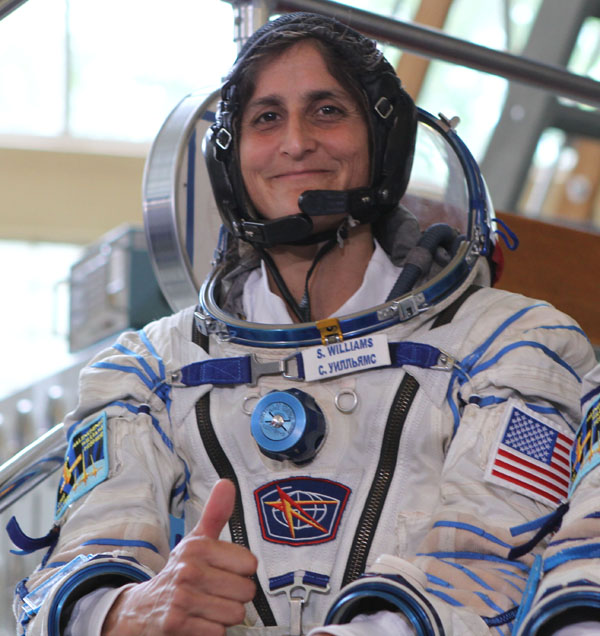
Indian American astronaut Sunita Williams has already voted by absentee ballot, but if she wanted she could have voted in the US presidential election from her home in space on election day itself. Williams, a captain in the US Navy, who is the current commander of the International Space Station, voted from Russia using the same absentee ballot that troops abroad use before she went on her second space sojourn in July.


So did flight engineer Kevin Ford, the second American on the six-member crew currently at the space lab. He voted with a Texas absentee ballot while stationed in Russia before the launch.

But if they wanted they could vote from space as NASA astronauts aboard the space station have the option of voting from space, thanks to savvy technology and a 1997 bill passed by Texas lawmakers.

Astronauts working on the space station receive a digital version of their ballots in a secure email, which are beamed up to them from Mission Control at the Johnson Space Centre in Houston, and then sent back to Earth, ABC News reported citing a NASA official.

"They send a secure ballot to Mission Control," NASA spokesman Jay Bolden was quoted as saying. "They'll send it up to our astronauts onboard, and they fill it out and send it back as a private email. Astronauts do have privacy in the matter."

The ballot is then sent directly to voting authorities. "The election folks count it and tabulate it just like any other vote," Bolden said.

Astronauts can vote this way in any kind of US election. Six astronauts have used the method to vote in presidential elections since it became law in 1997.

NASA astronauts Leroy Chiao, Edward Michael Fincke and Greg Chamitoff have all voted while aboard the space station.

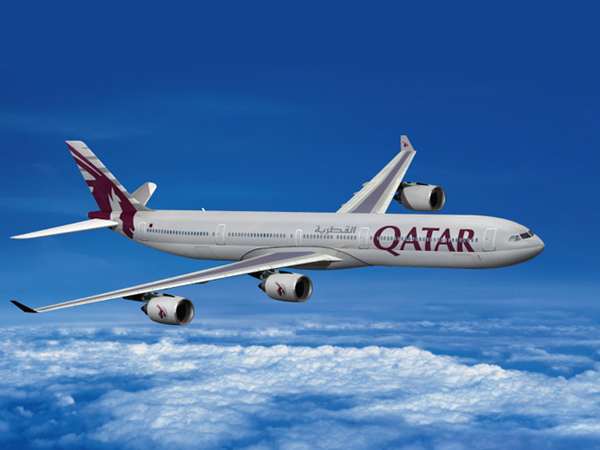
Qatar Airways launches global 72-hour sale at midnight

Qatar Airways is offering customers across India and around the world with great savings to more than 100 destinations during its latest three-day global sale.
The 72-hour marathon sale, which starts at 0001 hrs Nov 7 (local time in each market) and ends at 23:59 on Nov 9 (local time in each market) offers customers the opportunity to travel to a variety of destinations in Europe, the Middle East, Africa and the Americas at very attractive fares. 
From India, travelers looking to fly from nine cities - Ahmedabad, Bangalore, Chennai, Cochin, Delhi, Hyderabad, Kolkata, Mumbai and Trivandrum - to Doha and beyond, can take advantage of the special fares to Athens, Ankara, Barcelona, Berlin, Brussels, Frankfurt, Houston, Istanbul, London, Madrid, Milan, Manchester, New York, Nairobi, Rome, Paris, Stockholm, Washington and many more.
"The travel window is extremely generous over a six-month period between November 12 and May 31 next year. Seats are limited, subject to availability with restrictions on specific dates with some destinations excluded," an airline statement said.
The special fares are applicable to and from the majority of destinations served by Qatar Airways worldwide, including New York, Paris, London, Cairo, Johannesburg, Dubai and Madrid, together with recent route additions such as Maputo, Baku and Kilimanjaro.
Qatar Airways Chief Executive Officer Akbar Al Baker said: "As we come up to the end of yet another great year of great expansion, we would like to offer travellers another opportunity to take advantage of our special fares in our latest global sale, just two months after our last international promotion."
"Qatar Airways' success is largely due to the support of our customers. The Global Sale is our way of thanking our loyal passengers for their continued support and also welcome new travellers enabling them to enjoy a great travel experience onboard the world's best airline.
"Whether travelling for leisure or business, the three-day sale provides customers with the opportunity to visit popular destinations and discover newly-introduced routes available on our rapidly expanding network,"  Al Baker said.
The Doha-based airline, one of the world's fastest growing carriers, has seen rapid growth in just 15 years of operations, currently flying a modern fleet of 111 aircraft to 120 key business and leisure destinations across Europe, Middle East, Africa, Asia Pacific, North America and South America.
Since the beginning of 2012, Qatar Airways has launched flights to 10 new destinations - Baku (Azerbaijan); Tbilisi (Georgia); Kigali (Rwanda); Zagreb (Croatia), Erbil (Iraq), Baghdad (Iraq), Perth (Australia), Kilimanjaro (Tanzania); Yangon (Myanmar) and Maputo (Mozambique).
Over the next few months, Qatar Airways will launch services to a diverse portfolio of new routes, including Belgrade, Serbia (November 20); Warsaw, Poland (December 5), Gassim, Saudi Arabia (7 January 2013); Najaf, Iraq (January 23); Phnom Penh, Cambodia (February 20); and Chicago, USA (April 10).

Post win, Obama's new challenge is fiscal cliff

Barack Obama won re-election on Tuesday night, but the US president faces a fresh challenge confronting the "fiscal cliff," a mix of tax increases and spending cuts due to extract some $600 billion from the economy barring a deal with Congress.
 At stake are two separate issues - individual tax cuts due to expire at year's end and tens of billions of dollars in across-the-board federal spending cuts due to kick in the day after New Year's Day.
Failure to prevent a dive off the cliff could rattle US markets, and push the US economy into a recession, which could have global implications. How Obama fares with a familiar set of challenges - most notably a Republican-controlled House of Representatives - could color his second term.
Obama, who defeated Republican challenger Mitt Romney based on television projections, will want to strike a deal with Washington lawmakers before December 31 or risk a recession in the first half of 2013, budget experts and Democratic aides say.
His backers say his win gives him a mandate for an elusive "grand bargain" he sought in his first four-year term. Such a pact would raise new revenue, make changes to popular programs like the Medicare health program for the elderly and pare the federal deficit.
"They have signaled that they want a big deal and I think Obama will be aggressive about getting it," said Steve Elmendorf, a former House Democratic senior adviser and now a lobbyist.
At odds 
Obama and most Democrats are at odds with Republicans in Congress over the stickiest issue - whether to let low tax rates for the wealthiest Americans expire on December 31.
The president and most Democrats want to raise taxes on income earned above $250,000; Republicans want to extend the current low rates for all income levels.
Financial markets and the business community crave long-term certainty - and that is what a major deal envisioned by Obama is intended to tackle.
A big X-factor is how congressional Republicans will respond to an Obama win. The hard line against raising revenue taken by many Republicans in the House may not abate after the election.

House Speaker John Boehner said this week that his Republicans would stand firm on their position opposing any tax increases, even for millionaires, though he was speaking before the election results.
Republicans kept control of the House, as expected, and Democrats were projected to maintain control of the Senate.
An Obama victory "takes a lot of air out of the room for Republicans," Jim Walsh, a former Republican representative, who retired in 2009, predicted before the election. The odds of a grander deal with increased revenue - though not in the form of higher tax rates - goes up with an Obama victory, he said.
Former Democratic representative Bart Gordon was unsure whether more conservative elements of the party, associated with the Tea Party movement, would go along so easily. "Those folks don't need much of a reason to fight," Gordon said.

Romney concedes defeat; wishes Obama successful 2nd term

Conceding defeat, Republican challenger Mitt Romney today wished US President Barack Obama a successful second term in guiding the country through great challenges.
I have just called President Obama to congratulate him, his campaign and his supporters on the victory. I have wished him, his wife and daughters, 65-year-old Romney told his cheering supporters shortly after networks declared his defeat.
Still smiling and waving to them, Romney said this is a time of great challenges. I pray President Obama will be successful in guiding our nation.

Hoping that the economy will become resurgent once again, the businessman-turned politician said he honestly prayed for the President and the nation.
At this critical point, we can't risk political posturing, he said.
Hiding his emotions over the defeat, Romney told his supporters that everything on the field, we have all given to this campaign.
I so wished that I would have been able to fulfil your wishes but the nation has shown trust in the other leader. I honestly pray for him and the nation.
He profusely thanked his supporters for the wonderful campaign.

India-Canada resume N-trade after 36 years

Marking a milestone in transforming bilateral ties, India and Canada Tuesday announced the conclusion of an agreement to implement their civil nuclear deal that will allow Canadian companies to export uranium and atomic reactors to New Delhi after a gap of 36 years. The two countries also signed a social security agreement and two more pacts in areas of IT and defence technologies.

They unveiled a host of new initiatives, including launching a foreign ministers-level strategic dialogue and enhanced counter-terror cooperation, to scale up their partnership and decided to conclude their negotiations for a comprehensive economic cooperation pact by next year.

Prime Minister Manmohan Singh held talks with his Canadian counterpart Stephen Harper, who is here on a six-day visit, to accelerate ties across diverse sectors, including energy, trade and investment, agriculture and defence.

In a major step that removed the sole obstacle in accelerating bilateral ties, the two sides concluded an agreement on implementing their 2010 nuclear deal, reversing a 36-year-old ban when Canada froze its uranium supplies to Indian reactors in 1976, two years after India conducted nuclear tests in 1974.

"Prime Minister Harper's visit is yet another milestone in our bilateral relations," said Manmohan Singh after the talks.

The two prime ministers "welcomed the conclusion of negotiations on Appropriate Arrangement and looked forward to its early entry into effect, as well as to the inaugural meeting of the Joint Committee created under the agreement," said a joint statement after the talks.

"They also recognised that Canada, with its large and high-quality reserves of uranium, could become an important supplier to India's nuclear power programme," said the statement.

"We also welcomed the recent progress made towards concluding the modalities for the effective operationalisation of the agreement on civil nuclear energy cooperation that we had signed in 2010," said Manmohan Singh.

India and Canada completed talks on an administrative agreement that will enable Canadian companies such as Cameco Corp. (CCJ) to sell nuclear materials, equipment and technology to India, said a statement from Harper's office.

Harper stressed that selling uranium to India will be an important economic opportunity for Canadian companies.

"Being able to resolve these issues and move forward is, we believe, a really important economic opportunity for an important Canadian industry, part of the energy industry, that should pay dividends in terms of jobs and growth for Canadians down the road," he said.

"It is expected to generate millions of dollars in new business contacts between our countries and to create high-quality new jobs here at home," said Harper.

The nuclear pact will allow Canadian firms to export and import controlled nuclear materials, equipment and technology to and from India to facilities under safeguards applied by the International Atomic Energy Agency (IAEA), said the statement from Harper's office.

Harper, however, set no timeline for concluding a safeguards agreement to implement the nuclear deal the two countries signed in 2010.

Amid reports of a spurt in activities of "Khalistani" extremists in Canada, Harper assured India that his government will take appropriate action within the Canadian national law, said informed sources.

"We have similar concerns in combating terrorism, extremism and radicalism. The prime minister and I agreed to deepen our counter-terrorism cooperation," said Manmohan Singh.

Imparting a fresh momentum to bilateral ties, the two sides decided to scale up bilateral trade to $15 billion by 2015 and reaffirmed their resolve to conclude negotiations on a Comprehensive Economic Partnership Agreement (CEPA) by the end of 2013.

Energy cooperation is also poised for a fresh momentum as the two countries decided to step up joint efforts to develop capacities to maximise the utilisation of energy resources ranging from oil and gas to new hydrocarbon resources such as oil sands, shale gas and other sources of energy including renewables.

The best yet to come says Obama

President Barack Obama swept to a emphatic re-election win over Mitt Romney Tuesday, forging new history by transcending a dragging economy and the stifling unemployment which haunted his first term.
The 44th US president and the first African American to claim the Oval Office, was returned to power after a joyless election which appears to have deepened, rather than healed, his nation's political divides.
"In this election, you, the American people, reminded us that while our road has been hard, while our journey has been long, we have picked ourselves up, we have fought our way back," Obama said at a triumphant victory party in Chicago.
"We know in our hearts that for the United States of America the best is yet to come," Obama said, striving for inspirational heights rarely touched in a campaign where the prophet of hope of 2008 became a conventional, brawling politician.
As Obama's victory was confirmed with wins in rustbelt Ohio and his spiritual political home in Iowa, large crowds suddenly materialized at the White House, chanting "four more years" and "O-bama, O-bama."
Obama repaid the compliment from Romney in his speech, saying the Romney family "had chosen to give back to America through public service and that is the legacy that we honor and applaud tonight."
And in an intriguing aside, the president said he looked forward to sitting down with his former foe to find if they could find common ground to work together.
Once the euphoria fades, the president will face a tough task enacting his second term agenda, after Republicans, who thwarted him repeatedly in his first term, retained control of the House of Representatives.
Democrats kept the Senate but fell short of the 60-vote super majority needed to pass major legislation over Republican blocking tactics.
With a clutch of swing states including Florida still to be declared, Obama already had 303 electoral votes, well over the 270 needed to win the White House.
Obama paved the way to victory with a staunch defense of Democratic bastions in Pennsylvania, Wisconsin and Michigan, at which Romney had taken a last minute run when he saw more conventional paths to victory blocked.
He also locked in swing states, Virginia, which he became the first Democrat to win since 1964 four years ago, Nevada, Ohio, New Hampshire, Colorado and Iowa, crushing Romney's slim hopes of a viable path to victory.
Romney could only wrestle Indiana and North Carolina from Obama's 2008 account.
Obama and Romney were neck-and-neck in Florida, but the final results from the Sunshine State were not expected until Wednesday.
The win in Iowa will be especially sweet for Obama, as the heartland state nurtured his unlikely White House dreams way back in 2007 and a tear rolled down his cheek as he held his last ever campaign rally there late Monday.
His victory in Ohio represents a delayed repayment for his gutsy call in 2009 to mandate a federal bailout of the auto industry, on which one in eight jobs in the state depend and which Romney opposed.
Obama, no longer a prophet of hope and change, won re-election with a fiercely negative campaign, as he branded Romney, a former multi-millionaire corporate turnaround wizard as indifferent to the woes of the middle class.
Prior to Obama's victory, no president in 70 years had won re-election with the unemployment rate above 7.4 per cent. Although the economy has created more than five million jobs since the Great Recession, the rate is now 7.9 per cent.
Exit polls showed that though only 39 per cent of people believed that the economy was improving, around half of Americans blamed former Republican president George W. Bush for the tenuous situation, and not Obama.
Obama's victory was a complete vindication for a campaign team that had predicted a close, but winnable election, despite the painful after effects of the deepest economic crisis since the 1930s Great Depression.
The president ran for re-election on a platform of offering a "fair shot" to the middle class, of fulfilling his pledge to end the war in Iraq, killing Osama bin Laden, and of building a clean energy economy.
Remarkably, his coalition of Hispanic, African American and young voters, defied expectations and turned out in similar numbers to those of his euphoric change-fueled campaign in 2008, shocking Romney's team.
Latino voters in particular helped Obama to victory in the desert state of Nevada, and in the Rocky Mountains state of Colorado, US television networks projected.
Republicans had insisted right up to election day that Obama's army, disaffected by busted expectations for his first term, would stay home, and had predicted instead a late Republican wave that would elevate Romney.
Now, Obama will get the chance to protect his historic reforms of health care and Wall Street and may have the chance to shape the Supreme Court for a generation, with several vacancies on the bench expected to arise.

Obama will also likely look abroad as he builds his legacy, but will face an immediate challenge early in 2013 and a possible decision whether to use military force to thwart Iran's nuclear program.
More immediately, at home, Obama will face a swift showdown with Republicans on Capitol Hill, on the so-called 'fiscal cliff' involving the expiry of Bush-era tax cuts and a need to raise the US debt ceiling.
Ruinous budget cuts designed to trim the ballooning deficit, which could tip the economy into recession, are also about to come due, unless Obama can reach a deal with Republicans, who have opposed him tooth and nail for four years.
The president may have been helped at the 11th hour when superstorm Sandy roared ashore, killing more than 100 Americans, but giving Obama the chance to publicly pull the levers of government.

List of US presidents from 1789 TO uPTO nOW


Obama won a second term after defeating his Republican challenger Mitt Romney. But who were his descendants? Here's the list...

1.George Washington, 1789-1797
2.John Adams, 1797-1801
3.Thomas Jefferson, 1801-1809
4.James Madison, 1809-1817
5.James Monroe, 1817-1825
6.John Quincy Adams, 1825-1829
7.Andrew Jackson, 1829-1837
8.Martin Van Buren, 1837-1841
9.William Henry Harrison, 1841
10.John Tyler, 1841-1845
11.James Knox Polk, 1845-1849
12.Zachary Taylor, 1849-1850
13.Millard Fillmore, 1850-1853
14.Franklin Pierce, 1853-1857
15.James Buchanan, 1857-1861
16.Abraham Lincoln, 1861-1865
17.Andrew Johnson, 1865-1869
18.Ulysses S. Grant, 1869-1877
19.Rutherford Birchard Hayes, 1877-1881
20.James Abram Garfield, 1881
21.Chester Alan Arthur, 1881-1885
22.Grover Cleveland, 1885-1889
23.Benjamin Harrison, 1889-1893
24.Grover Cleveland, 1893-1897
25.William McKinley, 1897-1901
26.Theodore Roosevelt, 1901-1909
27.William Howard Taft, 1909-1913
28.Woodrow Wilson, 1913-1921
29.Warren Gamaliel Harding, 1921-1923
30.Calvin Coolidge, 1923-1929
31.Herbert Clark Hoover, 1929-1933
32.Franklin Delano Roosevelt, 1933-1945
33.Harry S. Truman, 1945-1953
34.Dwight David Eisenhower, 1953-1961
35.John Fitzgerald Kennedy, 1961-1963
36.Lyndon Baines Johnson, 1963-1969
37.Richard Milhous Nixon, 1969-1974
38.Gerald Rudolph Ford, 1974-1977
39.James Earl Carter, Jr., 1977-1981
40.Ronald Wilson Reagan, 1981-1989
41.George Herbert Walker Bush, 1989-1993
42.William Jefferson Clinton, 1993-2001
43.George Walker Bush, 2001-2009
44.Barack Hussein Obama, 2009-

It's Obama again !

.
Barack Obama wins the US Presidential election 2012! Soon after the results were out, the thrilled US president tweeted,"This happened because of you. Thank you."
US President Barack Obama swept to re-election on Tuesday, creating history again by defying the undertow of a slow economic recovery and high unemployment to beat Republican foe Mitt Romney.
Obama became only the second Democrat to win a second four-year White House term since World War II, when television networks projected he would win the bellwether state of Ohio where he had staged a pitched battle with Romney.
"This happened because of you. Thank you," Obama tweeted to his 22 million followers on Twitter as a flurry of states, including Iowa, which nurtured his unlikely White House dreams suddenly tipped into his column.
With a clutch of swing states, including Florida and Virginia still to be declared, Obama already had 275 electoral votes, more than the 270 needed for the White House and looked set for a comfortable victory.
There was a sudden explosion of jubilation at Obama's Chicago victory party as the first African American president, who was elected on a wave of hope and euphoria four years ago, booked another four years in the White House.
Romney's aides had predicted that a late Romney wave would sweep Obama from office after a single term haunted by a sluggish recovery from the worst economic crisis since the 1930s Great Depression and high unemployment.
But a huge cheer rang out at Obama headquarters when television networks projectedObama would retain Pennsylvania and its 20 electoral votes, and the party grew wilder as they called Wisconsin and Michigan.
The mood at Romney headquarters in Boston however had grown subdued throughout the evening as partisans stared at their smart phones.

Disappointed: Republicans were seen leaving what had been billed as a celebration of Romney's expected triumph in central Washington.
Defeats in New Hampshire, where Romney has a summer home and Wisconsin, the home of Republican vice presidential nominee Paul Ryan were especially sickening for Republicans.
Early signs were that the election, while a building triumph for Obama would do little to ease the deep polarization afflicting US politics, as Republicans racked up huge margins in safe states, though struggled in battlegrounds.
Exit polls appeared to vindicate the vision of the race offered by Obama's campaign, when top aides predicted that Obama's armies of African American, Latinos and young voters would come out in droves.
Polls also showed that though only 39 percent of people believed that the economy was improving, around half of Americans blamed President George W. Bush for the tenuous situation, and not Obama.
The president, who made history by becoming America's first black president after a euphoric victory, carved a new precedent on Tuesday by defying the portents of a hurting economy to win a second term.
He awaited his fate in his hometown of Chicago, while Romney, a multi-millionaire former investment manager and Massachusetts governor was laying low in a hotel in Boston awaiting results.
As expected, television networks projected that Republicans would win the House of Representatives.
Democrats clung onto the Senate, and retained a seat in Missouri, where Senator Claire McCaskill fended off a challenge by Representative Todd Akin, whose remarks about rape and abortion sparked national outrage.
Both presidential candidates had earlier marked time while voters dictated their fates.
Romney appeared caught up in the emotion of seeing his name on the ballot for President of the United States and also saw an omen in a huge crowd that showed up at a multi-story parking lot to see his plane land at Pittsburgh airport.
"Intellectually I felt that we're going to win this and I've felt that for some time," Romney told reporters on his plane.
"But emotionally, just getting off the plane and seeing those people standing there... I not only think we're going to win intellectually but I feel it as well."
While Romney penned his victory speech, Obama took part in his election day tradition of playing a game of pick-up basketball with friends, including Chicago Bulls legend Scottie Pippen, after visiting a campaign office near his Chicago home.
The president, who like a third of Americans voted before election day, congratulated Romney on "a spirited campaign" despite their frequently hot tempered exchanges.
"I know that his supporters are just as engaged and just as enthusiastic and working just as hard today. We feel confident we've got the votes to win, that it's going to depend ultimately on whether those votes turn out," he said.
"I think anybody who's running for office would be lying if they say that there's not some butterflies before the polls come in because anything can happen," the president added later in a radio interview.
CBS News, quoting early exit polls, said 39 percent of people approached after they had voted said the economy, the key issue, was improving, while 31 percent said it was worse and 28 saw it as staying the same.